
.hack//SIGN
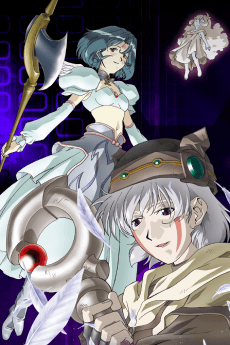
A young wavemaster, only known by the alias of Tsukasa, wakes up in an MMORPG called The World, with slight amnesia. He does not know what he has previously done before he woke up. In The World, he is suspected to be a hacker of the Crimson Knights, as he was seen accompanying a tweaked character in the form of a cat. Unable to log out from the game, he wanders around looking for answers, avoiding the knights and other players he meets along the way. As Tsukasa explores The World, he stumbles upon a magical item that takes the form of a 'guardian', which promises him protection from all harm. Subaru, the leader of the Crimson Knights, along with several other players who became acquainted with Tsukasa, set out to investigate why Tsukasa is unable to log out, and attempt to get to the bottom of the problem before it gets out of hand. [Written by MAL Rewrite]
.hack//SIGN is a tv with 26 episodes, from Spring 2002, produced by Bee Train, rated 6.6/10 on AniList.
Synopsis
A young wavemaster, only known by the alias of Tsukasa, wakes up in an MMORPG called The World, with slight amnesia. He does not know what he has previously done before he woke up. In The World, he is suspected to be a hacker of the Crimson Knights, as he was seen accompanying a tweaked character in the form of a cat. Unable to log out from the game, he wanders around looking for answers, avoiding the knights and other players he meets along the way. As Tsukasa explores The World, he stumbles upon a magical item that takes the form of a 'guardian', which promises him protection from all harm. Subaru, the leader of the Crimson Knights, along with several other players who became acquainted with Tsukasa, set out to investigate why Tsukasa is unable to log out, and attempt to get to the bottom of the problem before it gets out of hand. [Written by MAL Rewrite]
Main Characters
Tags
- Virtual World — Partly or completely set in the world inside a video game.
- Female Protagonist — Main character is female.
- Video Games — Centers around characters playing video games.
- Anti-Hero — Features a protagonist who lacks conventional heroic attributes and may be considered a borderline villain.
- Gender Bending — Prominently features a character who dresses and behaves in a way characteristic of another gender, or has been transformed into a person of another gender.
- Isekai — Features a character from a modern-day setting being transported into an alternate world and has to adapt to their new surroundings.
- Amnesia — Prominently features a character(s) with memory loss.
- Magic — Prominently features magical elements or the use of magic.
- Ensemble Cast — Features a large cast of characters with (almost) equal screen time and importance to the plot.
- Tragedy — Centers around tragic events and unhappy endings.
- Dissociative Identities — A case where one or more people share the same body.
- Denpa — Works that feature themes of social dissociation, delusions, and other issues like suicide, bullying, self-isolation, paranoia, and technological necessity in daily lives. Classic iconography: telephone poles, rooftops, and trains.