

Wolf Children
おおかみこどもの雨と雪
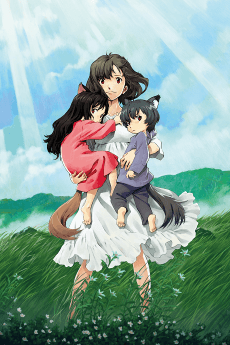
The theme of the film is the love between parents and children. The story covers 13 years and begins with a 19-year-old college student named Hana who encounters and falls in "fairy tale-like" love with a "wolf man." After marrying the wolf man, Hana gives birth and raises two wolf children—an older sister named Yuki who was born on a snowy day, and a younger brother named Ame who was born on a rainy day. The four quietly lived in a corner of a city to conceal the existence of the "wolf children," but when the wolf man suddenly dies, Hana decides to move to a rural town far removed from the city. (Source: Anime News Network)
Wolf Children is a movie with 1 episode, from Spring 2012, produced by MADHOUSE, Studio Chizu, rated 8.3/10 on AniList.
Synopsis
The theme of the film is the love between parents and children. The story covers 13 years and begins with a 19-year-old college student named Hana who encounters and falls in "fairy tale-like" love with a "wolf man." After marrying the wolf man, Hana gives birth and raises two wolf children—an older sister named Yuki who was born on a snowy day, and a younger brother named Ame who was born on a rainy day. The four quietly lived in a corner of a city to conceal the existence of the "wolf children," but when the wolf man suddenly dies, Hana decides to move to a rural town far removed from the city. (Source: Anime News Network)
Main Characters
Tags
- Parenthood — Centers around the experience of raising a child.
- Family Life — Centers around the activities of a family unit.
- Werewolf — Prominently features a character who is a werewolf.
- Coming of Age — Centers around a character's transition from childhood to adulthood.
- Shapeshifting — Features character(s) who changes one's appearance or form.
- Female Protagonist — Main character is female.
- Rural — Partly or completely set in the countryside.
- Environmental — Concern with the state of the natural world and how humans interact with it.
- Interspecies — Romance between characters of different species.
- Kemonomimi — Prominently features humanoid characters with animal ears.
- Animals — Prominently features animal characters in a leading role.
- Mythology — Prominently features mythological elements, especially those from religious or cultural tradition.