

SSSS.GRIDMAN
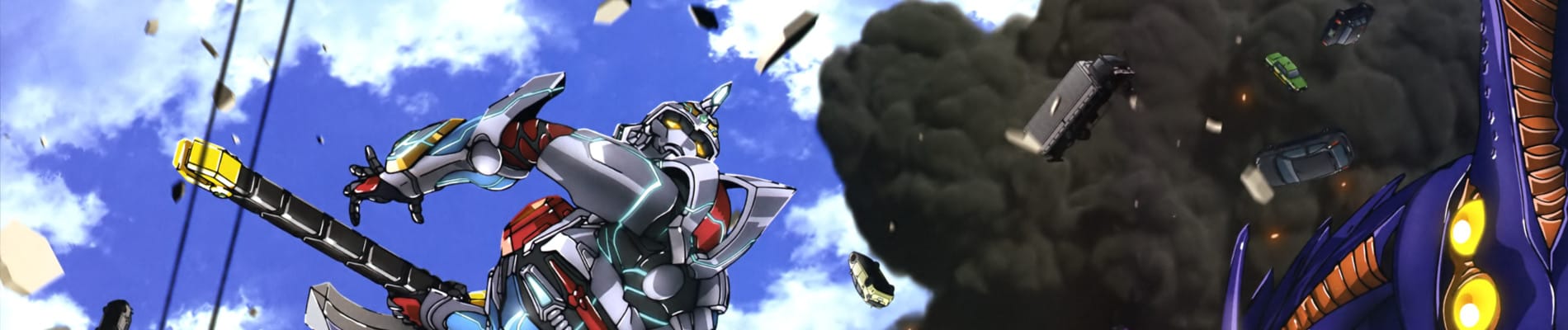
Collaboration with Tsuburaya Productions. Yuta Hibiki awakens with amnesia and the ability see things that others cannot. He first encounters a Gridman in the reflection of his friend Rikka Takarada's computer and it tells him to "Remember his calling," but Yuta doesn't understand what this means. Later, in the distance, he sees an extremely large monster but it doesn't move. It's only when Yuta gets to school that the two sightings make sense: a monster attacks and the hero Yuta saw in the computer screen pulls him within the computer and transforms Yuta into a giant hero named Gridman. (Source: Anime News Network)
SSSS.GRIDMAN is a tv with 12 episodes, from Fall 2018, produced by TRIGGER, rated 7.1/10 on AniList.
Synopsis
Collaboration with Tsuburaya Productions. Yuta Hibiki awakens with amnesia and the ability see things that others cannot. He first encounters a Gridman in the reflection of his friend Rikka Takarada's computer and it tells him to "Remember his calling," but Yuta doesn't understand what this means. Later, in the distance, he sees an extremely large monster but it doesn't move. It's only when Yuta gets to school that the two sightings make sense: a monster attacks and the hero Yuta saw in the computer screen pulls him within the computer and transforms Yuta into a giant hero named Gridman. (Source: Anime News Network)
Main Characters
Tags
- Tokusatsu — Prominently features elements that resemble special effects in Japanese live-action shows
- Kaiju — Prominently features giant monsters.
- Super Robot — Prominently features large robots often piloted by hot-blooded protagonists.
- Denpa — Works that feature themes of social dissociation, delusions, and other issues like suicide, bullying, self-isolation, paranoia, and technological necessity in daily lives. Classic iconography: telephone poles, rooftops, and trains.
- Alternate Universe — Features multiple alternate universes in the same series.
- Memory Manipulation — Prominently features a character(s) who has had their memories altered.
- Virtual World — Partly or completely set in the world inside a video game.
- Meta — Features fourth wall-breaking references to itself or genre tropes.
- Ensemble Cast — Features a large cast of characters with (almost) equal screen time and importance to the plot.
- Anti-Hero — Features a protagonist who lacks conventional heroic attributes and may be considered a borderline villain.
- Henshin — Prominently features character or costume transformations which often grant special abilities.
- Hikikomori — Prominently features a character who withdraws from social life, often seeking extreme isolation.